


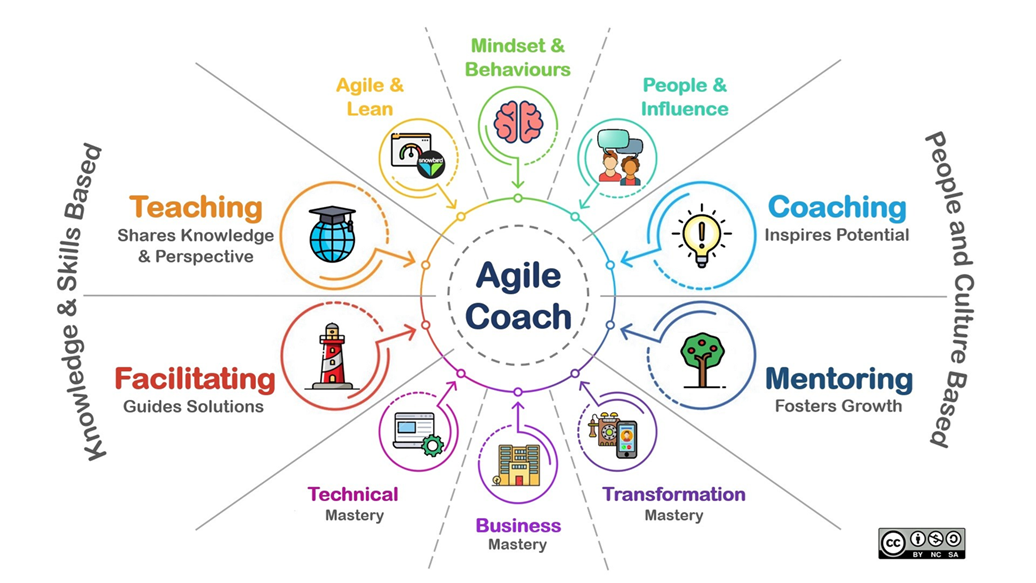
Agile Coaching for Digital Transformation is no longer optional in today’s fast-changing business environment, it is a strategic necessity. Organizations across industries are investing heavily in digital technologies, yet many struggle to realize real business value. The challenge is not technology alone, but how people, processes, and culture evolve together. This is where Agile Coaching plays a critical role in keeping digital transformation initiatives aligned, adaptive, and outcome-focused.
Agile coaching acts as a guiding force, helping organizations navigate uncertainty, embrace change, and continuously deliver value to customers throughout their digital transformation journey.
Successful Agile Coaching Digital Transformation initiatives are built on strong enablers:
Agile coaches work closely with leadership teams to ensure these enablers are embedded across the organization, not just within IT or delivery teams.
Digital transformation must start with clarity of purpose. Agile coaching encourages organizations to define clear business outcomes, not just technology milestones.
By beginning with the end in mind, such as improved customer experience, faster time-to-market, or operational efficiency, agile coaches help teams align initiatives with measurable value and strategic goals.
An innovative culture is the backbone of Agile Coaching Digital Transformation. Agile coaches foster psychological safety, experimentation, and collaboration.
Teams are encouraged to:
This cultural shift ensures innovation becomes a habit rather than a one-time initiative.
Digital transformation succeeds when data and technology are activated effectively. Agile coaches help organizations use real-time data, analytics, and feedback loops to guide decisions.
Rather than large, risky implementations, agile coaching promotes incremental delivery, allowing teams to validate assumptions early and pivot when needed.
Scaling digital transformation requires more than tools—it requires readiness. Agile coaching focuses on:
This ensures agility is sustained as transformation efforts grow across teams and geographies.
An Agile approach to Digital Transformation emphasizes iterative delivery, continuous feedback, and cross-functional collaboration.
Frameworks such as Scrum, Kanban, SAFe®, or hybrid models are adopted based on organizational context. Agile coaches guide teams in selecting and tailoring the right approach instead of enforcing rigid models.
Traditional waterfall approaches often fail in dynamic digital environments. Agile works because it:
Agile coaching ensures these principles are practiced consistently, not just discussed theoretically.
Key benefits of Agile Coaching for Digital Transformation include:
Organizations become more resilient and responsive to market changes.
Despite its benefits, agile transformation is not without challenges:
Agile coaches help overcome these challenges through coaching, mentoring, and organizational alignment.
In conclusion, Agile Coaching Digital Transformation is the bridge between ambition and execution. Agile coaches enable organizations to stay focused on outcomes, adapt to change, and continuously improve.
By fostering an agile mindset, aligning strategy with execution, and empowering people at all levels, agile coaching ensures digital transformation delivers sustainable and measurable business value.